FDA Preapproval Inspection (PAI)

An FDA Preapproval Inspection (PAI) is a critical step in the regulatory approval process for pharmaceutical, medical device, biologic, and combination product manufacturers. These inspections may be conducted in connection with New Drug Applications (NDA), Premarket Approval Applications (PMA), Biologics License Applications (BLA), and applicable combination product submissions. FDA evaluates manufacturing readiness, quality systems, data integrity, process validation, and compliance with applicable regulatory requirements. CIRG provides mock FDA preapproval inspections led by former FDA investigators and compliance officers. Our assessments help manufacturers identify deficiencies, strengthen quality systems, and address potential compliance risks before an actual FDA preapproval inspection.
What Is an FDA Preapproval Inspection (PAI)?
An FDA Preapproval Inspection (PAI) evaluates whether a manufacturer can consistently produce products that meet applicable regulatory requirements. FDA conducts these inspections before approving certain drug, medical device, and biologic applications. Inspectors assess manufacturing operations, quality systems, process validation, data integrity, and compliance with current Good Manufacturing Practice (CGMP) requirements.
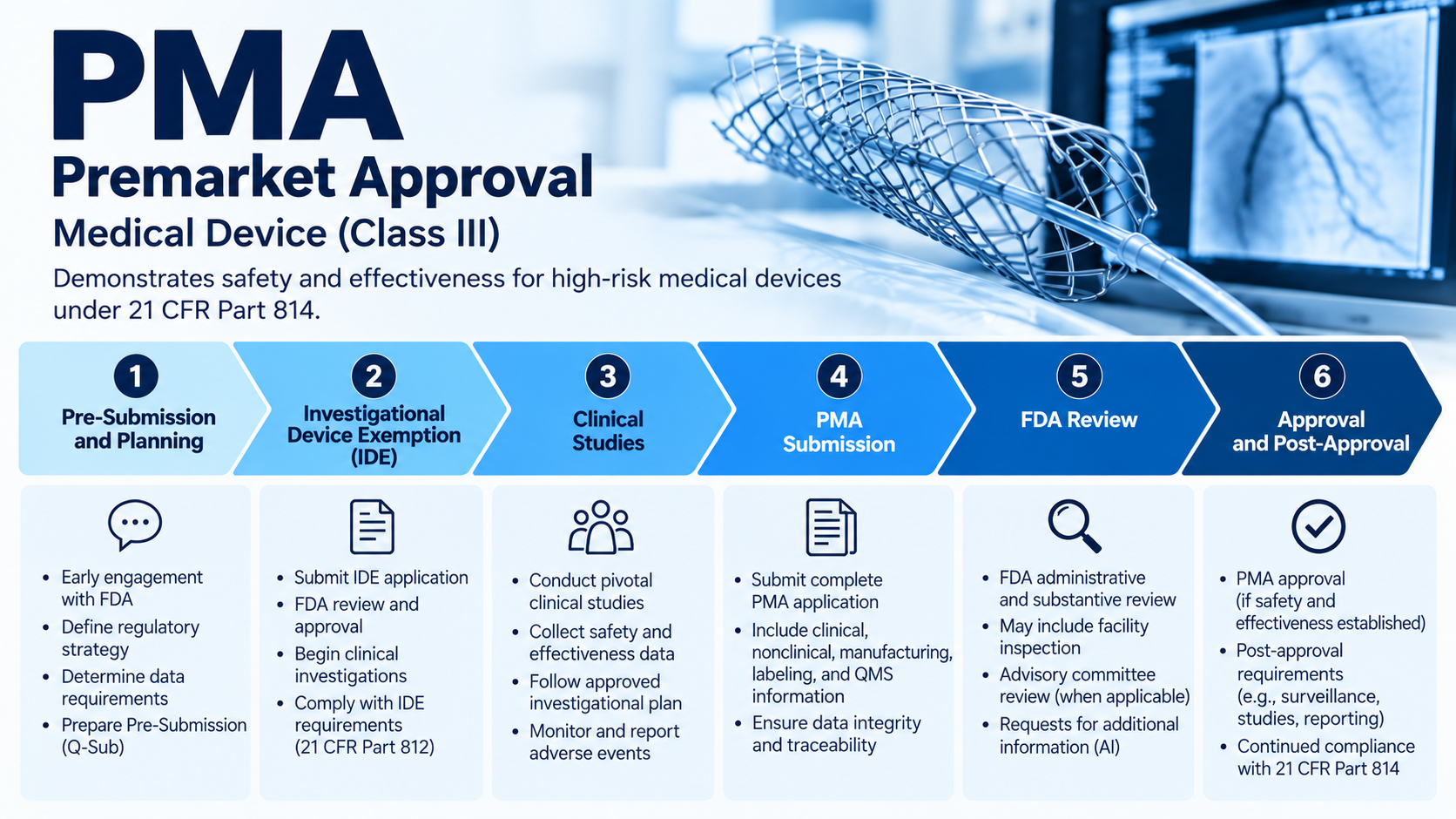
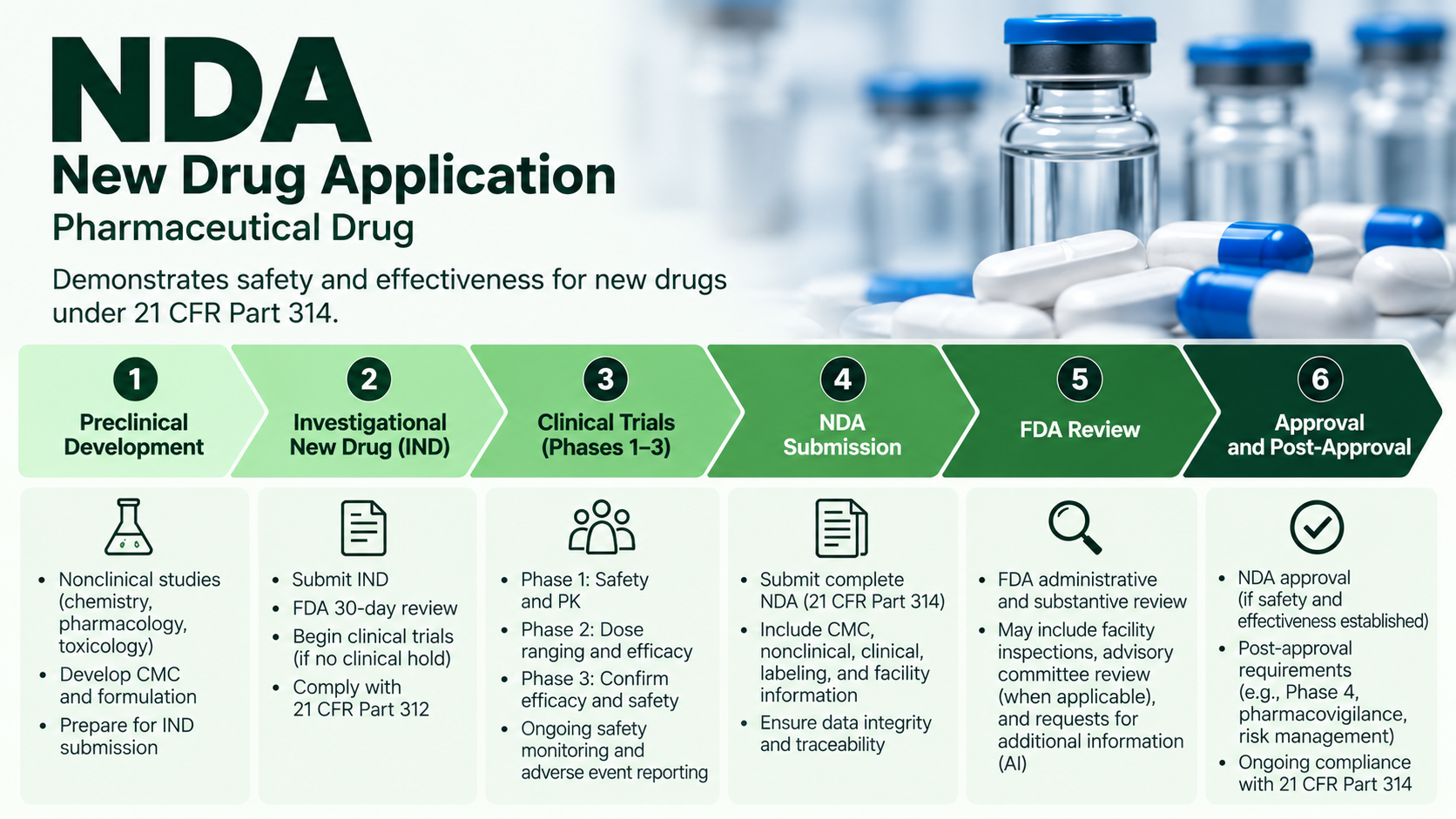
For pharmaceuticals, FDA may conduct a PAI to verify information submitted in a New Drug Application (NDA). Medical device inspections associated with Premarket Approval (PMA) focus on applicable quality management system requirements. Biologics License Applications (BLA) may also involve facility inspections before approval. Combination products require additional consideration because regulatory requirements depend on their constituent parts and application pathways.
A mock FDA inspection helps manufacturers identify compliance gaps before FDA arrives. Former FDA investigators assess inspection readiness, review objective evidence, and recommend corrective actions to strengthen regulatory compliance.
When Does FDA Conduct a Preapproval Inspection?
FDA conducts a Preapproval Inspection (PAI) during the application review process when manufacturing facilities require evaluation before product approval. Inspection timing depends on the application type, manufacturing complexity, compliance history, and potential risks to product quality.
For New Drug Applications (NDA), FDA may inspect manufacturing facilities to verify application data, production capabilities, and CGMP compliance. Biologics License Applications (BLA) may require inspections to assess manufacturing controls, facility readiness, and product consistency.
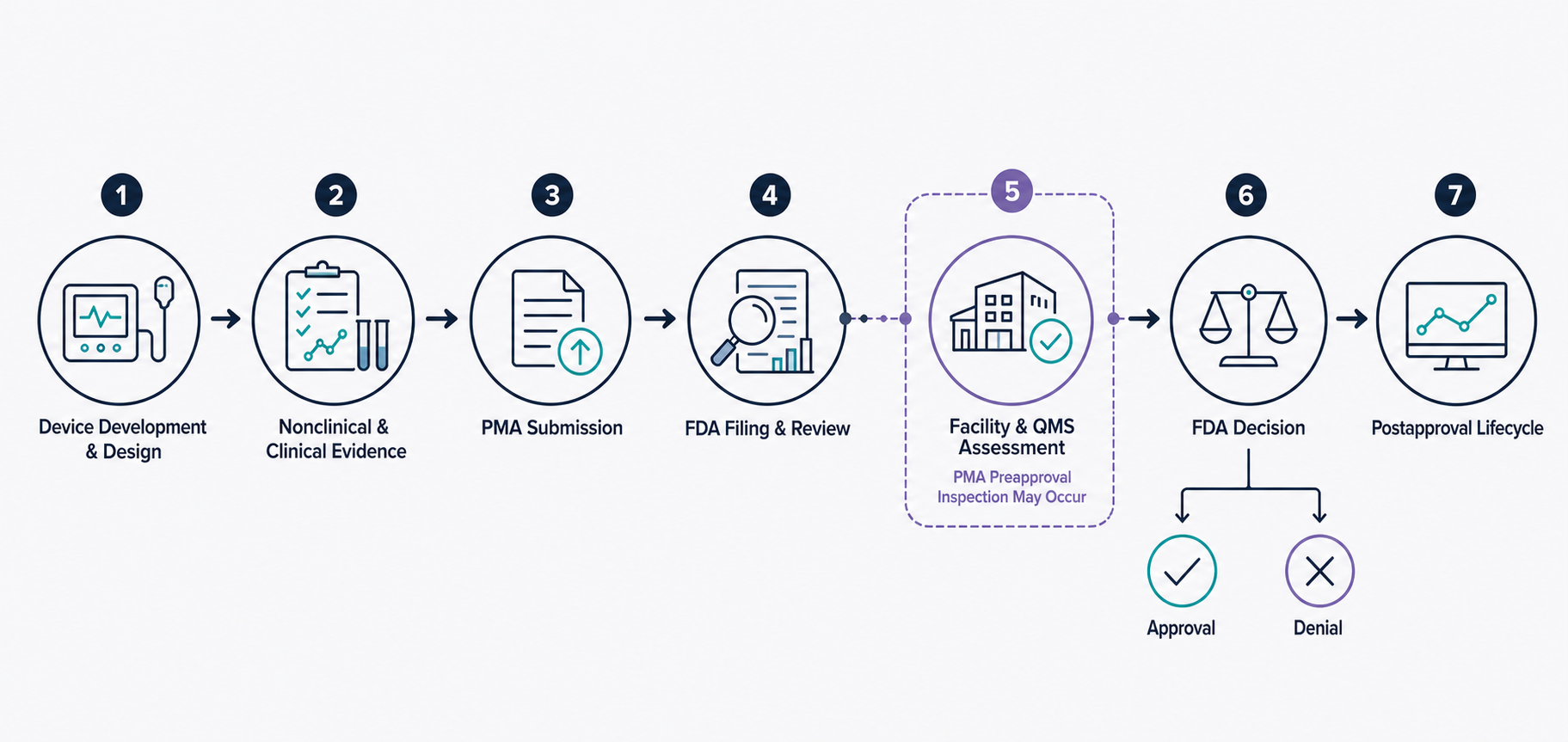
For Premarket Approval (PMA) applications, FDA generally evaluates applicable medical device quality management system requirements before granting approval. Combination product inspections depend on the product’s regulatory classification and applicable manufacturing requirements. Not every application triggers an on-site inspection. FDA determines inspection needs using regulatory requirements and risk-based considerations.
Drug Preapproval Inspections for New Drug Applications (NDA)
FDA conducts drug preapproval inspections to evaluate manufacturing readiness and verify information submitted in a New Drug Application (NDA). Investigators examine whether facilities can consistently manufacture drugs that meet established quality, safety, and regulatory requirements. During an FDA Preapproval Inspection (PAI), investigators assess manufacturing processes, equipment qualification, process validation, laboratory controls, and data integrity. They also review batch records, analytical methods, and supporting documentation to confirm consistency with the NDA.
FDA may identify deficiencies involving incomplete validation, unreliable laboratory data, inadequate investigations, or discrepancies between actual manufacturing practices and application commitments. A mock FDA inspection helps pharmaceutical manufacturers identify these weaknesses before an official inspection. Former FDA investigators evaluate CGMP compliance, examine supporting evidence, and assess manufacturing readiness. Early preparation allows manufacturers to address deficiencies, strengthen quality oversight, and reduce the risk of approval delays associated with inspection findings.
Medical Device Preapproval Inspections for Premarket Approval (PMA)
FDA conducts preapproval inspections for medical devices undergoing Premarket Approval (PMA) to evaluate manufacturing controls and quality management system compliance. These inspections help determine whether manufacturers can consistently produce devices that meet approved specifications and applicable regulatory requirements.
During an FDA preapproval inspection, investigators assess design and development controls, production processes, process validation, supplier controls, and corrective and preventive actions (CAPA). FDA also evaluates compliance with the Quality Management System Regulation (QMSR), which incorporates ISO 13485:2016.
Investigators may identify deficiencies involving inadequate design verification, incomplete validation, ineffective CAPA, or insufficient manufacturing controls. Such findings can delay PMA approval until manufacturers resolve significant compliance concerns.
Biologics Preapproval Inspections for Biologics License Applications (BLA)
FDA conducts preapproval inspections for Biologics License Applications (BLA) to assess manufacturing facilities, production controls, and compliance with applicable regulatory requirements. These inspections help determine whether manufacturers can consistently produce biological products that meet established quality and safety standards.
During an FDA Preapproval Inspection (PAI), investigators evaluate manufacturing processes, contamination controls, aseptic processing, process validation, and laboratory testing. They also examine batch records, equipment qualification, environmental monitoring, and data integrity to verify manufacturing readiness.
Biologics present unique challenges because manufacturing processes can directly influence product quality, purity, and potency. FDA may identify deficiencies involving inadequate contamination controls, incomplete validation, or unreliable analytical data.
FDA Preapproval Inspections for Combination Products
Combination products integrate drugs, medical devices, or biological products into a single therapeutic product or coordinated treatment. FDA evaluates manufacturing readiness according to the product’s primary mode of action, application pathway, and applicable regulatory requirements.
Under 21 CFR Part 4, manufacturers must comply with relevant current Good Manufacturing Practice (CGMP) requirements for combination products. FDA investigators may examine drug manufacturing controls, device quality management systems, biological product requirements, and interactions between constituent parts. Inspection priorities include process validation, design controls, contamination prevention, supplier qualification, and product performance. Investigators also assess whether manufacturing operations align with information submitted in the regulatory application.
Combination products present additional challenges because manufacturers must integrate different regulatory requirements into an effective quality system. CIRG helps manufacturers evaluate these complex requirements, identify compliance gaps, and prepare supporting documentation before FDA inspection.
What Do FDA Investigators Evaluate During a Preapproval Inspection?
An FDA preapproval inspection begins with the application, not a generic quality system checklist. Investigators first study the submitted manufacturing information and identify claims that require verification at the facility.
For an NDA, that means examining the Chemistry, Manufacturing, and Controls (CMC) section. Investigators then trace selected claims to actual equipment, batch records, laboratory data, process parameters, and production practices. Does the commercial process match the submitted description? Can the firm substantiate analytical results and validation conclusions?
For a PMA, investigators review the device’s submitted design and manufacturing information, then assess whether the facility can manufacture that specific device as described. Biological and combination product applications require attention to their respective manufacturing commitments.
Discrepancies can prompt deeper examination of original records, unexplained changes, and data reliability. The central question is whether actual operations support what the manufacturer told FDA.
Manufacturing Readiness and Process Validation
A successful validation report does not necessarily prove that a facility is ready for commercial manufacturing. FDA investigators look beyond documentation to determine whether actual production operations support the submitted application. During an FDA Preapproval Inspection (PAI), investigators may compare commercial equipment, batch sizes, manufacturing parameters, and process controls against application commitments. They examine whether validation studies adequately demonstrate reproducible manufacturing performance.
For pharmaceutical manufacturers, FDA evaluates process qualification, critical process parameters, and control strategies. Medical device manufacturers must demonstrate appropriate process validation when subsequent inspection or testing cannot fully verify the results. Equipment qualification, personnel competency, utilities, and environmental controls also influence manufacturing readiness. Even completed validation studies may become questionable when manufacturers introduce undocumented changes.
Data Integrity and Application Accuracy
Can the manufacturer prove that every critical result submitted to FDA accurately reflects the original data? This question drives an important part of an FDA Preapproval Inspection (PAI). Investigators may trace selected results from the application back to laboratory instruments, electronic records, analytical worksheets, and original observations.
For drug applications, FDA compares submitted Chemistry, Manufacturing, and Controls (CMC) information against supporting manufacturing and laboratory records. Investigators may examine audit trails, deleted data, repeated testing, unexplained sample injections, and changes to analytical methods. They also assess whether personnel followed approved procedures when generating reported results. An apparently acceptable final result means little if the underlying records lack credibility.
Manufacturers must demonstrate data completeness, consistency, and traceability throughout product development and manufacturing. Application accuracy is not merely a documentation exercise. It establishes whether FDA can trust the evidence supporting its approval decision.
How a Mock FDA Inspection Helps Prepare for a PAI
A conventional internal audit typically begins with procedures and evaluates compliance against established requirements. A properly designed mock FDA inspection takes a different approach. The assessment begins with the regulatory application. CIRG examines selected manufacturing commitments, identifies critical processes, and develops inspection questions around the evidence supporting those commitments. Our former FDA investigators then follow documentation through manufacturing operations, laboratory records, validation studies, and quality investigations.
Personnel interviews help determine whether employees understand their responsibilities and can explain actual practices without relying on scripted answers. When discrepancies emerge, the assessment expands to evaluate their potential impact on product quality and application accuracy. This approach provides more than a checklist of deficiencies. Manufacturers gain a practical understanding of how FDA investigators may examine their operations during an FDA Preapproval Inspection (PAI). Findings support focused corrective actions before the actual inspection.
Preapproval Inspection Readiness by Former FDA Investigators
Preparing for FDA requires more than understanding regulatory requirements. Manufacturers must anticipate how investigators evaluate evidence, question employees, and pursue inconsistencies. CIRG brings firsthand FDA inspection experience to pharmaceutical, medical device, biologics, and combination product manufacturers.
Our consulting expertise includes former FDA investigators, Compliance Officers, and supervisory personnel with experience evaluating manufacturing operations and regulatory compliance. Unlike a traditional consulting assessment, our approach considers how inspectional observations develop from specific records, interviews, and manufacturing activities. We examine whether documented conclusions have sufficient supporting evidence and whether corrective actions address actual compliance risks. For an FDA Preapproval Inspection (PAI), preparation must reflect the product, application commitments, manufacturing processes, and applicable regulations. Our objective is not to teach employees how to answer inspection questions. It is to ensure their answers reflect compliant practices supported by reliable evidence.
What Happens When an FDA Preapproval Inspection Identifies Deficiencies?
An unfavorable inspection can affect the approval timeline, especially when FDA questions manufacturing readiness, application accuracy, or data reliability. Investigators may document significant observations on Form FDA 483 at the conclusion of an inspection. However, an FDA 483 does not represent the agency’s final determination.
For drug inspections, manufacturers generally have 15 business days to submit a response for FDA’s consideration. A credible response should identify root causes, assess the extent of affected operations, and establish corrective actions supported by objective evidence. When deficiencies remain significant, FDA may recommend withholding approval until the manufacturer adequately addresses the concerns. Depending on the circumstances, FDA may require additional documentation or conduct a follow-up inspection.
Schedule a Mock FDA Preapproval Inspection
Your regulatory application is under review. Is your manufacturing facility ready for FDA?
Before an FDA Preapproval Inspection (PAI), manufacturers should know whether their operations support the information submitted for approval. Discovering significant discrepancies during an official inspection can jeopardize timelines and require extensive corrective actions. CIRG offers targeted mock FDA preapproval inspections conducted by former FDA investigators and compliance professionals. We tailor each assessment to your application, manufacturing processes, regulatory requirements, and potential inspection risks.
Whether your company is pursuing an NDA, PMA, BLA, or combination product approval, our team provides an independent evaluation of inspection readiness. You receive clear findings, practical recommendations, and priorities for corrective action before FDA arrives.
Contact CIRG to schedule a confidential consultation. Discuss your application status, manufacturing readiness, and inspection timeline with professionals who understand FDA’s inspection process firsthand.