Why a Mock FDA Inspection Is Not Optional

Why a Mock FDA Inspection Is Not Optional becomes clear when executives compare preparation costs with uncontrolled regulatory disruption. The Agency requires compliance, not mock inspections. However, waiting for investigators transfers control over timing, resources, and corrective strategy. Quality teams already manage CAPA, complaints, suppliers, validation, audits, training, and quality issues. Expecting them to independently challenge systems they operate adds workload and weakens objectivity. Outside experts test records, interview employees, follow evidence, and expose cross-functional weaknesses before official scrutiny. Leadership gains time to rank risks, fund remediation, and confirm effective corrections. That control disappears quickly when investigators uncover inconsistent records, unsupported decisions, or ineffective CAPA. Potential findings can interrupt operations, consume executive attention, and create urgent response demands. Early preparation, therefore, protects market access, management capacity, and the company’s corrective strategy. Executives should treat inspection readiness as a business priority.

Why QA Leaders Should Insist on a Mock FDA Inspection
Quality leaders should advocate for a mock FDA inspection because their teams deserve independent support, not because they lack skill. Internal expertise cannot fully reproduce how an Agency investigator questions employees, reviews records, and follows evidence. QA professionals know the procedures, history, constraints, and people behind each system. That knowledge supports daily compliance, but it can also normalize familiar explanations and limit independent challenge. Real interview techniques, record review, evidence collection, and inspection decisions shape the lens through which former Agency investigators bring. Their perspective shows how one inconsistent record can open broader questions across CAPA, complaints, validation, or management oversight. QA managers can present this assessment as executive risk intelligence, not criticism of their department. The goal is to strengthen QA, expose blind spots, and prepare the entire organization for regulatory scrutiny.
Why QA Teams Need Fresh Eyes on Familiar Systems
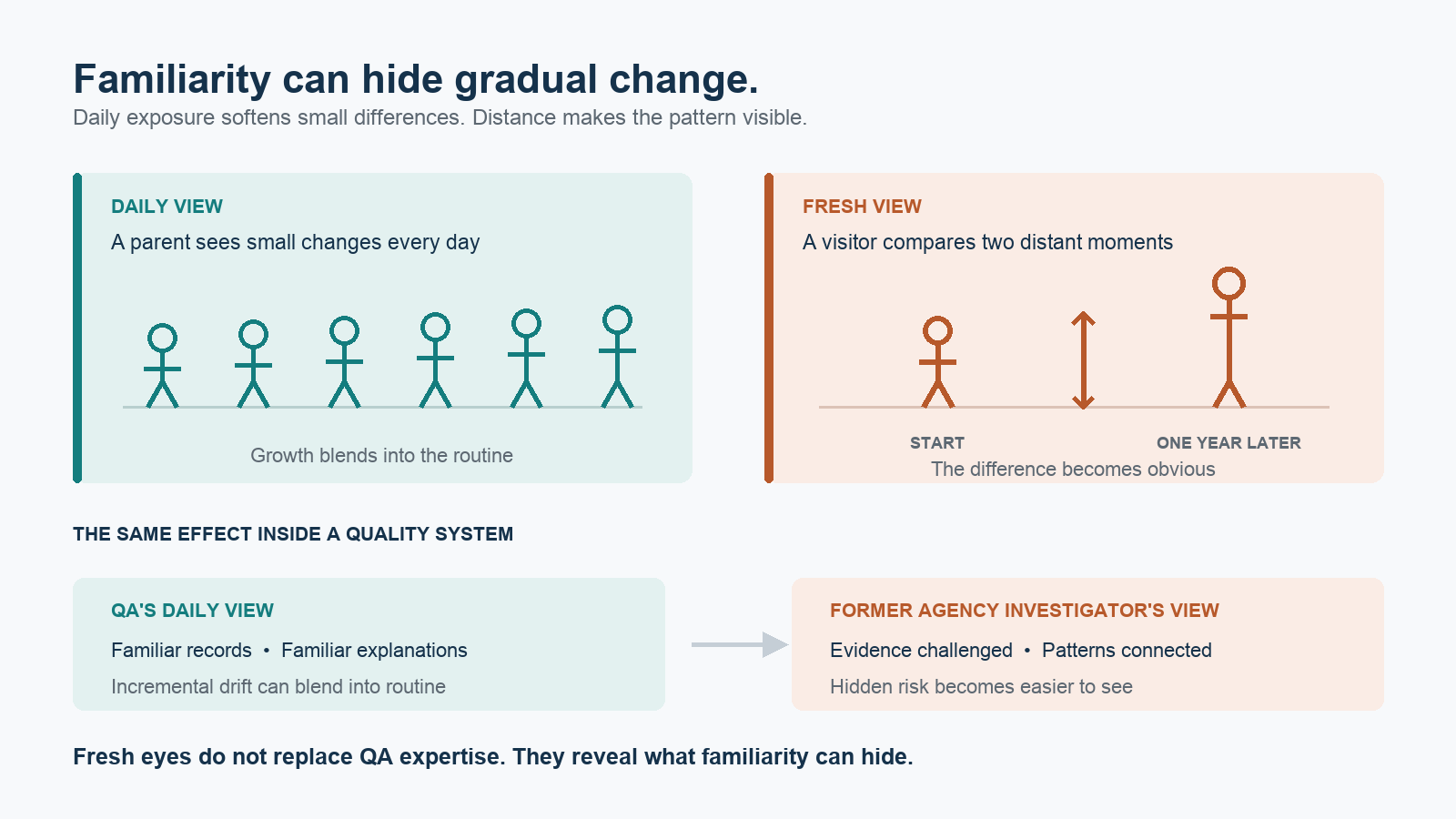
Daily familiarity helps QA teams manage complex systems, but it can also make gradual weaknesses harder to recognize. Parents may not notice a child growing each day, while an annual visitor sees the change immediately. Quality systems behave similarly. Small documentation shortcuts, recurring investigation gaps, and inconsistent practices can become normal through repeated exposure. A mock FDA inspection brings fresh eyes that notice patterns internal teams may reasonably overlook. Former Agency investigators approach records without institutional assumptions, historical explanations, or ownership of prior decisions. They follow evidence, test explanations, and connect issues across departments. That distance gives QA leaders clearer support when escalating risk to executives. Independent perspective does not replace internal expertise. It sharpens that expertise, validates strong controls, and reveals developing problems before investigators see them under official scrutiny.
How Former Agency Investigators Challenge Evidence Differently
Why a Mock FDA Inspection Is Not Optional becomes clearer when leaders understand how investigators evaluate evidence. Internal audits often begin with procedures, scheduled samples, and known process owners. Former Agency investigators may start with one record, question its explanation, and follow connections across systems. They compare written controls with employee practices, supporting records, and management decisions. A minor inconsistency can therefore lead toward complaints, CAPA, validation, training, suppliers, or data integrity. Experienced FDA consulting helps QA teams rehearse that investigative pressure without questioning their competence. The exercise tests whether explanations remain consistent when reviewers request more records or interview different employees. It also shows executives where documentation and operations tell different stories. This independent challenge strengthens internal audits and gives leadership time to correct systemic weaknesses before official scrutiny begins.
Why Compliance Confidence Needs Independent Verification
Compliance confidence should come from demonstrated system performance, not familiar procedures, successful audits, or reassuring dashboards. A mock FDA inspection tests whether the organization can defend its decisions when reviewers challenge records, explanations, and implementation. QA teams often know why a process evolved, which exceptions occurred, and how employees resolved past problems. That context helps them manage quality, but it may also soften questions that an unfamiliar investigator would pursue. Independent verification removes those assumptions and examines what the evidence communicates on its own. Leaders can then separate genuine control from confidence that repetition creates. The goal is not to disprove QA’s conclusions. It is to confirm that procedures, records, employee practices, and management oversight tell one consistent story before Agency scrutiny begins.
Familiar Systems Can Normalize Small Deviations
Daily exposure changes how teams interpret recurring problems. A late CAPA, incomplete investigation, or inconsistent record may initially attract attention. Repetition can gradually make the same weakness feel ordinary, especially when production continues, and no immediate harm appears. QA professionals may understand the history so well that each exception carries a familiar explanation. An independent reviewer lacks that history and asks what the records prove today. This distance helps reveal patterns across complaints, training, validation, suppliers, and management review. An FDA mock inspection provides a fresh comparison before official investigators establish their own narrative. Strong teams benefit because the exercise identifies normalization, not incompetence. Leaders gain a clearer picture of which issues remain isolated and which ones signal broader system weakness.
Internal Audit Results Need an Independent Stress Test
Internal audits provide essential oversight, but their design usually reflects known procedures, schedules, and organizational priorities. Auditors may select familiar samples, interview established contacts, or accept explanations that match previous conclusions. Those choices do not invalidate the audit. They simply create boundaries that an Agency investigator may not respect. Independent reviewers can follow an unexpected inconsistency, request different records, and compare answers across departments. Effective FDA consulting should recreate that uncertainty while preserving a constructive environment for QA. The stress test shows whether controls work beyond the original audit scope. It also reveals whether employees can retrieve records, explain decisions, and support statements with objective evidence. QA leaders can use those results to improve audit programs without undermining their teams.
Evidence Must Survive Follow-Up Questions
Records rarely speak for themselves during an inspection. Investigators ask who made a decision, what evidence supported it, and whether later events confirmed effectiveness. A mock FDA inspection tests those connections before the Agency begins asking. Reviewers can trace one complaint into CAPA, training, validation, supplier controls, or management review. Each answer should match written procedures, actual practices, and related records. Contradictions can weaken confidence even when individual documents appear complete. QA teams need this pressure because routine reviews may stop after confirming that the required forms exist. Independent challenge asks whether the organization can defend the reasoning behind those forms. When explanations remain consistent across people and systems, leaders gain credible evidence of readiness. When they do not, leadership gains time to correct the weakness.
Executives Need Verification, Not Reassurance
Executives make resource decisions using the confidence QA leaders provide. Reassurance without independent evidence can delay funding, staffing, or corrective action until risk becomes visible externally. Verification gives leadership a stronger basis for prioritizing work. It identifies which weaknesses threaten inspection readiness, which controls perform reliably, and where management attention matters most. QA leaders can present findings with clear evidence, cross-functional impact, and practical remediation priorities. That approach changes the conversation from requesting another audit to protecting business continuity. Why a Mock FDA Inspection Is Not Optional reflects this leadership’s need for tested confidence. Independent review gives executives information they can act on before deadlines, findings, or enforcement concerns narrow their choices. It also gives QA the support needed to resolve problems that exceed departmental authority.
Why ISO Certification Does Not Guarantee Agency Readiness
ISO certification can demonstrate that a medical device or pharmaceutical company follows a recognized management-system standard within an audited scope. It does not replace the Agency’s inspection authority or establish compliance with every applicable requirement. Certification audits and Agency inspections follow different purposes, methods, sampling decisions, and regulatory priorities. Investigators may examine product-specific records, reporting duties, manufacturing controls, laboratory practices, complaints, investigations, and management oversight. A mock FDA inspection tests whether those systems withstand separate regulatory scrutiny. QA leaders should treat certification as valuable evidence, not complete proof of readiness. Experienced FDA consulting can help teams map certification controls against applicable device or pharmaceutical requirements. Executives then gain a clearer view of gaps that routine audits may not expose. Independent verification protects the value of certification while testing the broader compliance story that investigators will evaluate.
The Escalation Pattern Leaders Often Recognize Too Late
Compliance risk rarely arrives as one dramatic failure. It often develops through recurring complaints, weak investigations, overdue CAPA, inconsistent records, or unresolved audit findings. Individually, each issue may appear manageable. Together, they can reveal a quality system that does not consistently control risk. During an inspection, investigators may document objectionable conditions on Form 483. Those observations do not represent a final Agency determination. However, weak or incomplete corrections can deepen concerns and contribute to further regulatory action. An FDA mock inspection helps QA leaders connect warning signals before that sequence gains momentum. Independent reviewers trace repeated failures across products, sites, suppliers, laboratories, and management decisions. Executives then see the pattern as enterprise risk, not isolated quality work. Early recognition preserves time for credible corrections, effectiveness checks, and coordinated communication before official deadlines compress every decision.
Why Reactive Remediation Costs More Than Early Correction
Reactive remediation begins after investigators have documented observations and questioned the company’s quality controls. Leadership must then correct weaknesses while managing response deadlines, ongoing operations, and heightened internal scrutiny. Urgency often forces companies to use more personnel, outside specialists, and executive time simultaneously. Teams may revise procedures quickly, yet the Agency may later assess each correction’s adequacy and sustainability. Warning Letter close-out eligibility requires completed, verified corrective actions, not promises alone. Follow-up inspections may test whether those actions remain effective. Early correction gives QA time to investigate causes, involve process owners, test solutions, and document effectiveness before official review. It also lets executives sequence spending around operational priorities instead of regulatory pressure. Independent specialists can help leadership distinguish immediate containment from durable systemic remediation. Preserving those choices provides the business case for leadership to schedule a mock FDA inspection now.
When Leadership Should Authorize a Mock FDA Inspection
Leadership should authorize independent readiness testing before risk concentrates, not after an inspection notice or serious quality signal. Practical triggers include major product launches, new facilities, technology transfers, acquisitions, recurring complaints, significant recalls, or unresolved CAPA trends. Application-based inspections can evaluate facilities supporting new drugs, devices, or biologics. For-cause inspections may follow suspected quality problems, complaints, or previous violations. Risk-based surveillance also considers compliance history, facility type, product risk, recalls, and other hazard signals. These factors do not predict a specific inspection date. They show when management should reduce uncertainty. FDA consulting can help leaders define scope, select high-risk systems, and separate readiness testing from routine internal auditing. Authorization should include cross-functional participation, protected time, prompt remediation funding, and executive review of unresolved findings.
Keep the Timeline, Resources, and Corrective Strategy Under Company Control
Preparation creates a controlled window for finding weaknesses before official scrutiny changes the company’s priorities. Leaders can choose the scope, sequence resources, and assign realistic owners for remediation. An FDA mock inspection preserves that window while testing how teams perform under investigative pressure. Leaders can rank findings by patient risk, regulatory significance, systemic reach, and operational impact. Management can then fund corrections, verify effectiveness, and rehearse consistent responses across medical device and pharmaceutical functions. During an official inspection, investigators direct their questions and evidence requests within the applicable authority. A timely Form 483 response may influence the Agency’s decision about subsequent action. Preparation never guarantees a favorable classification or prevents enforcement. It gives executives a stronger factual basis for decisions before deadlines and external consequences narrow available choices. Control belongs with leadership while meaningful preparation remains possible.
What Changes When the Agency Controls the Timeline
Once an official inspection begins, company leaders lose much of their flexibility over timing and priorities. Investigators determine which operations, records, and samples require attention within the inspection’s authorized scope. New evidence can redirect questions toward complaints, CAPA, suppliers, laboratories, validation, or management oversight. Meanwhile, employees must support requests, maintain production, and keep explanations consistent across functions. Experienced FDA consulting can also test response roles, document retrieval, escalation paths, and executive availability. If investigators issue Form 483, the Agency considers timely written responses during its compliance review. Current instructions generally emphasize submission within 15 business days after inspection completion. A mock FDA inspection creates that pressure while leadership still controls scheduling and remediation. Preparation cannot remove regulatory authority or guarantee an outcome. It can prevent avoidable confusion from consuming the limited time available for clear evidence and credible corrective commitments.
Why Inspection Findings Become an Executive Business Problem
Inspection findings rarely remain inside the quality department. Significant concerns can require remediation budgets, production changes, supplier decisions, legal review, and direct leadership oversight. Public Warning Letters can also affect customer confidence, partner diligence, and commercial negotiations. Depending on the facts, the Agency may pursue recalls, import alerts, seizures, injunctions, or other actions. None of these outcomes automatically follows a Form 483. However, leadership must respond when evidence suggests weak controls or ineffective corrections. QA cannot independently authorize capital spending, pause distribution, replace suppliers, or align external communications. Executives therefore own the resources and risk decisions behind sustainable remediation. That preparation helps leaders assign accountability, protect product availability, and support credible corrections across device and pharmaceutical operations. An FDA mock inspection converts technical observations into business scenarios before official findings force urgent choices.
Take Control Before the Agency Arrives
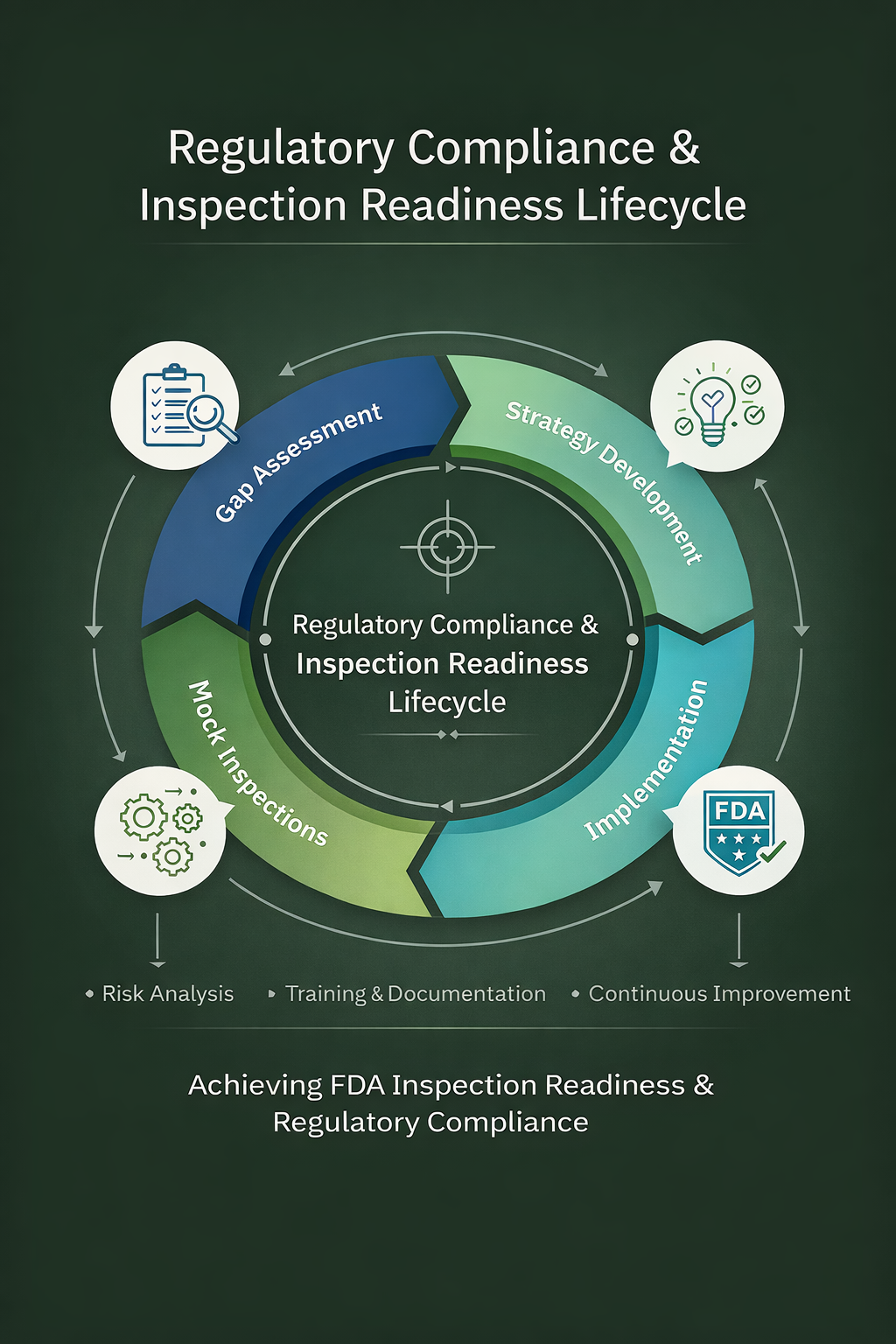
Inspection readiness improves when leadership converts concern into a funded, accountable plan. Bring QA, operations, regulatory, laboratory, engineering, and executive sponsors into one focused readiness effort. Experienced FDA consulting can challenge evidence, test employee responses, and prioritize weaknesses without disrupting routine oversight. Why a Mock FDA Inspection Is Not Optional should become the question your leadership team resolves before official scrutiny begins. Schedule an independent assessment while your company still controls timing, scope, resources, and corrective decisions. Use the findings to assign owners, fund durable solutions, and confirm effectiveness. Prepared leaders better protect patients, products, market access, and organizational credibility.